Home / Brewing
Brewing Guide
Tibetan tea is forgiving. These are the proportions we use — treat them as a starting point, not a rule.
Always rinse first
Weigh the dry leaf, then rinse once with 95–100 °C spring water and discard. Aged tea needs two rinses. Pressed bricks need two rinses. Only then steep, stew or simmer.
| Water | Spring or filtered, 95–100 °C |
|---|---|
| Rinse | Once — twice for aged tea and pressed brick |
| Drinking temperature | 80–85 °C for the traditional simmered style |
| Target cup | Deep chestnut brown, faintly astringent, never bitter |
- 01
Cup brewing
Take 3–4 g of dry leaf and pour boiling water straight over it. Expect 8–9 infusions. When the liquor thins, move the leaves to a pot and follow method 04.
- 02
Gaiwan / pot
Take 5–6 g. Pour in a slow, fine stream onto a fixed point. Fast in and fast out for the early infusions, then let each one run longer. Again 8–9 infusions, then simmer.
- 03
Long steep
Choose the leaf weight to suit the vessel — roughly 3.5–5 g — and leave it sealed for 20 to 30 minutes before drinking. The softest, roundest version of the tea.
- 04
Simmering — the traditional way
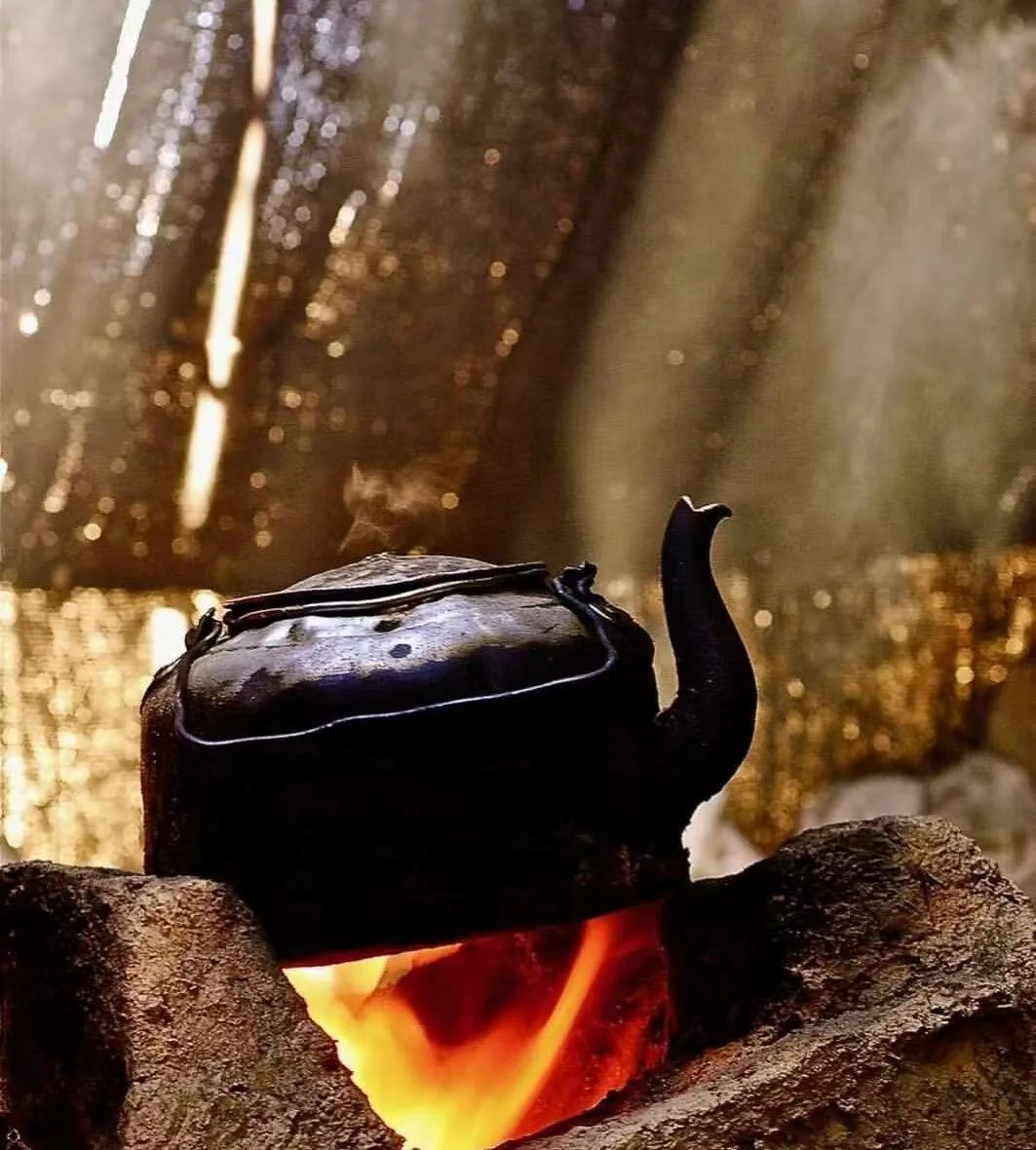
Scale to the pot: 5–8 g of dry leaf per litre of water. Bring to a hard boil for 2–3 minutes, then drop to a low simmer for 5. Pour off the tea but keep a little liquor as a base, top up with boiling water, and repeat.
Add whatever you like
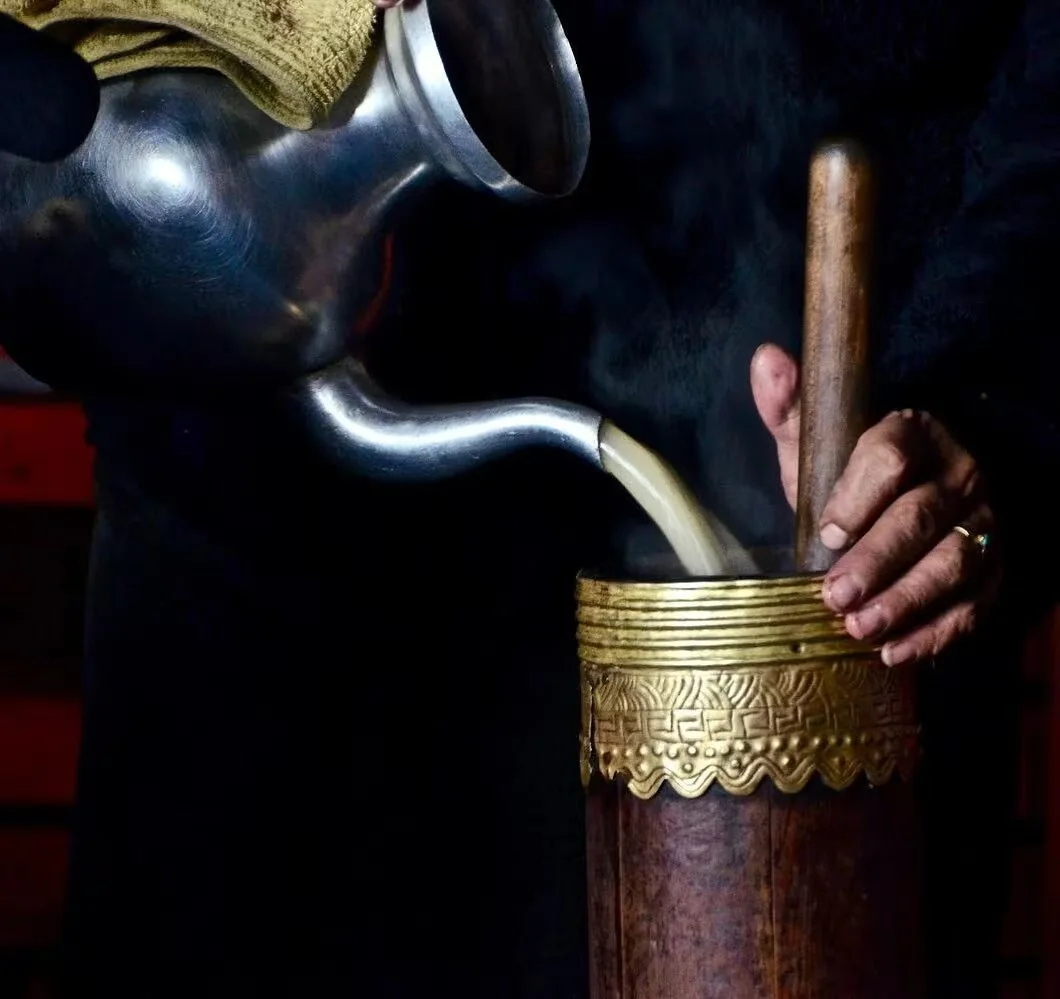
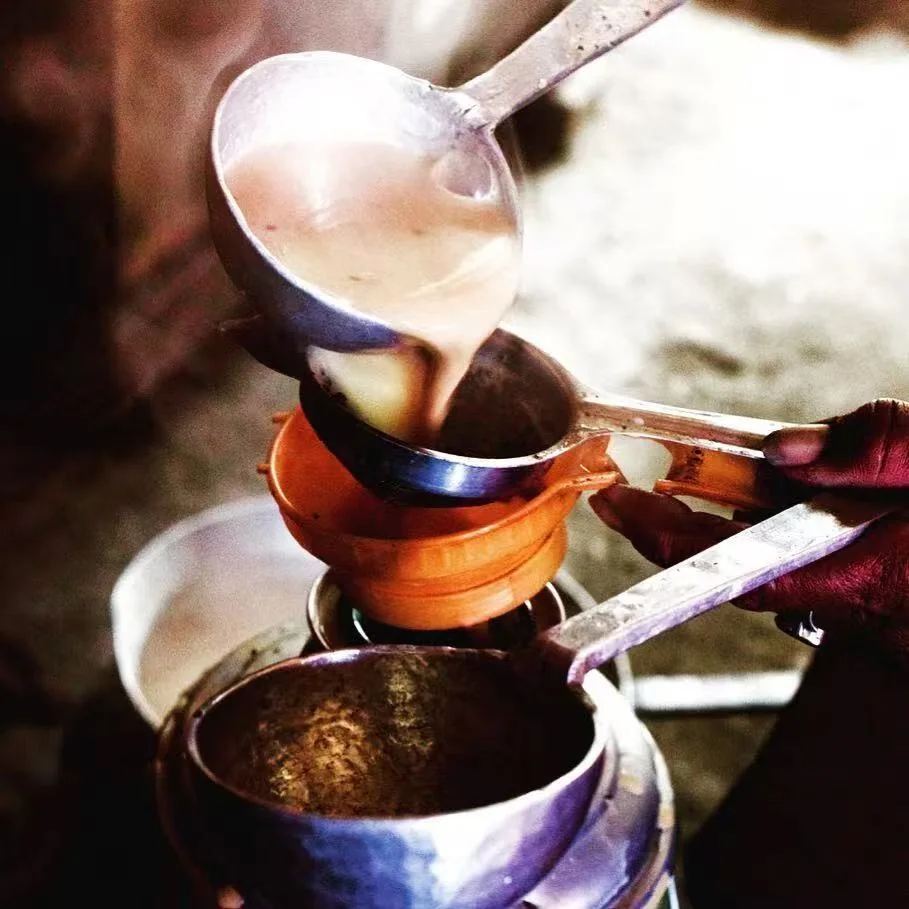
This is the part people find surprising. Tibetan tea holds up to milk, sugar, salt, butter, sesame oil, sesame seed, crushed peanut — and none of it drags the tea down. On the plateau the standard cup is churned with butter and salt; in a European kitchen it makes an excellent base for a milk tea that does not need sweetening.