
Home / Heritage
Heritage
Six hundred years of caravans, a craft protected by the state, and one man who grew up beside his grandfather's kettle.
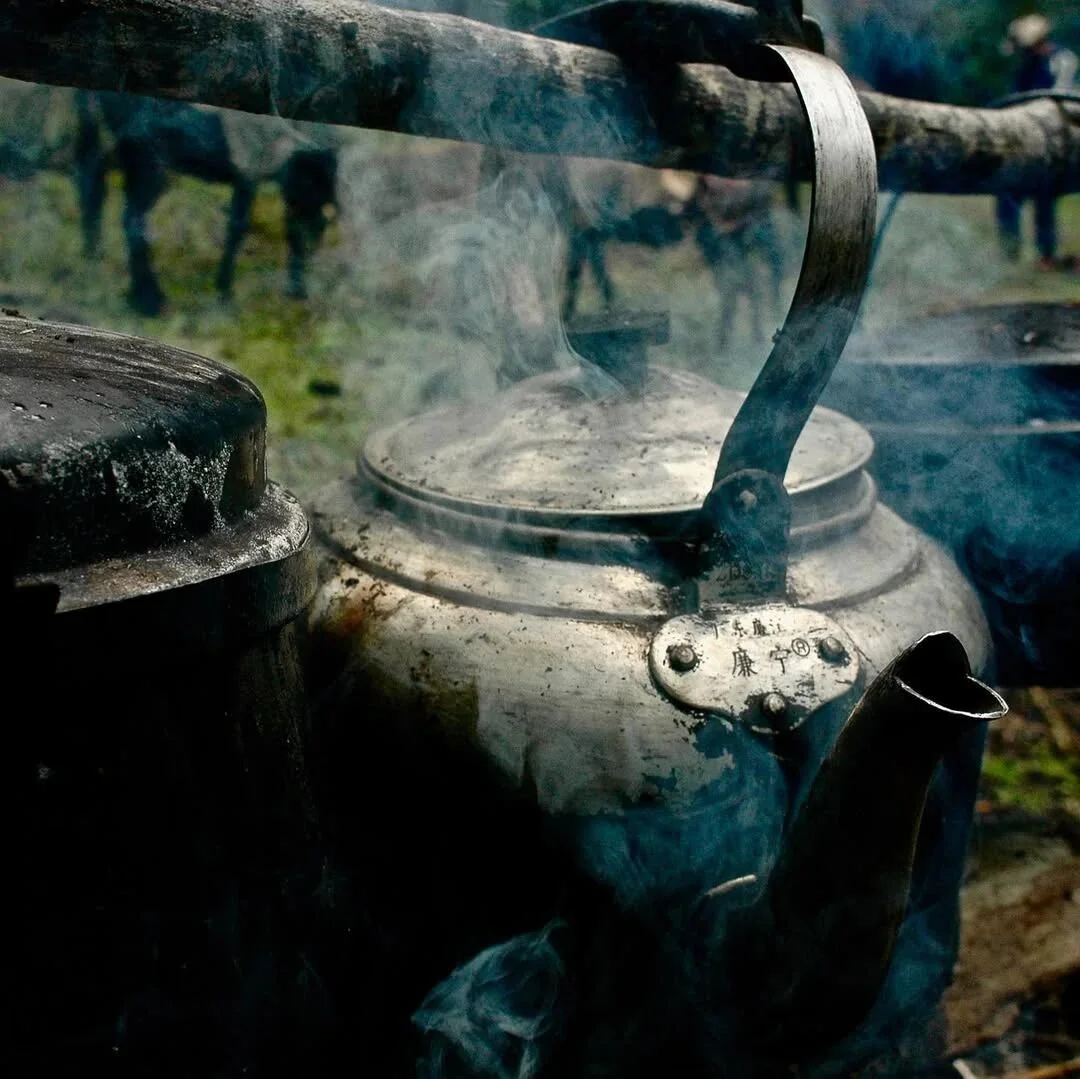
Not a luxury. A necessity.
Tibetans live at altitude, where fresh vegetables are scarce for most of the year. Tibetan tea is how vitamins and minerals have reached the plateau table for centuries — brewed with milk, salt or butter, drunk from morning to night, in every household.
That is what people mean when they call it "the people's tea of nearly six million Tibetans." It was never a connoisseur's object. It is the tea of daily life, and it earned its complexity by being drunk every single day.
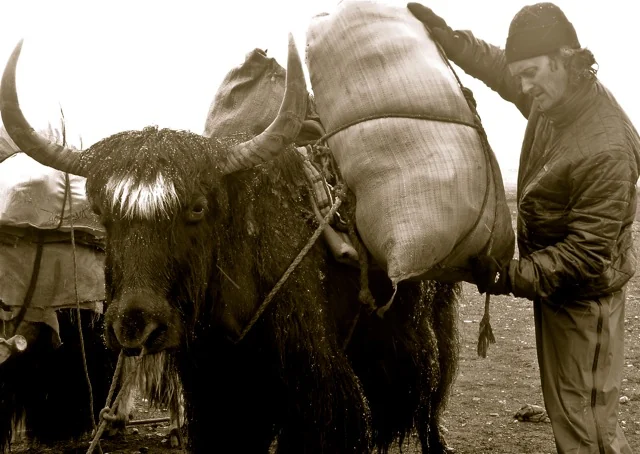
Tea went west on the backs of yaks and men; horses came east. Everything either side of that trade eventually became culture.
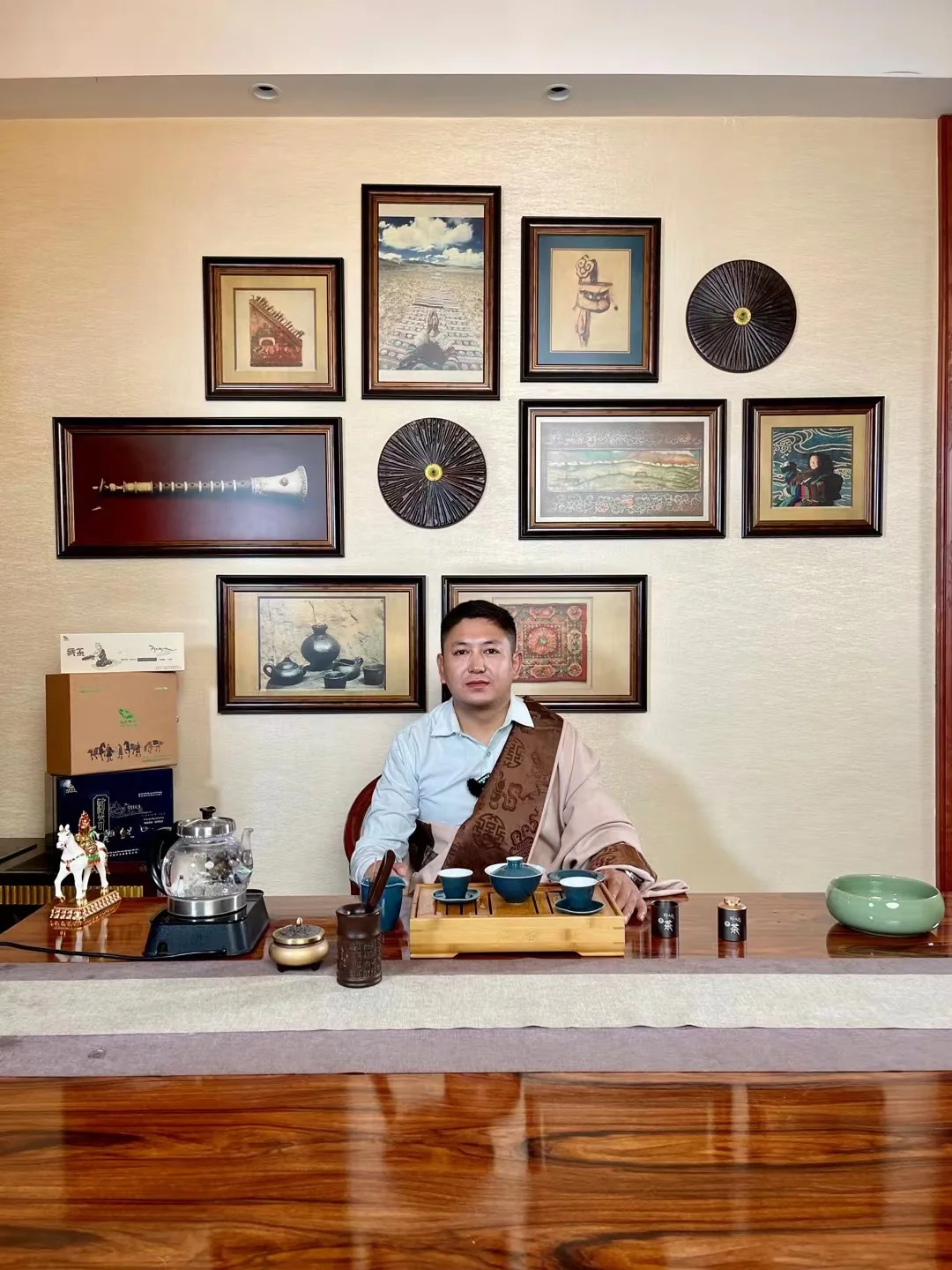
Suolang Qiupo
Born on the Hongyuan grassland of Aba Prefecture, Sichuan, into an Amdo Tibetan family. Generations of living alongside Kham country reshaped the household into something wholly Sichuan-Tibetan — and left him, from childhood, sitting beside a grandfather who never stopped drinking tea.
He set out to carry Tibetan tea culture forward — to make a tea that reads as contemporary in the cup while still meeting what the plateau palate expects of it. GADINAL is that attempt.
- 2008
National intangible cultural heritage
In June 2008, the craft of Southern Route border tea — Ya'an Tibetan tea — entered China's second national list of intangible cultural heritage. Gadinal works within this tradition.
- 2023
First launch in Chengdu
Gadinal held its first product launch in Chengdu, with mainland actor and singer Du Yiheng fronting the brand.
- 2023
Luxury platform partnership
A long-term purchase agreement was signed with the luxury platform Z·International Haishehui.
- 2023
Album sponsorship
The brand sponsored the 2023 solo album launch of the Tibetan singer Luoba, and was warmly received by the guests attending.
Four characteristics
- 一
It does the body good
The whole plant is used and fermented together, so the range of compounds in the cup is comparatively rich — helpful for digestion and metabolism.
- 二
It is easy-going
Simpler than most teas: steep it, infuse it, stew it, simmer it. Each method gives a different cup, and none of them are wrong.
- 三
It takes anything
Milk, sugar, salt, butter, sesame oil, sesame, peanut — additions do not flatten it. They add layers.
- 四
It is worth keeping
Compressed dark tea keeps fermenting slowly in suitable air and humidity. With years, colour and flavour both grow rounder.